Quarterly fits homes where pest pressure is seasonal and repeating, not a one-time accident . That describes most of Pflugerville. Homes backing greenbelt and drainage easements in Falcon Pointe and Avalon get steady…
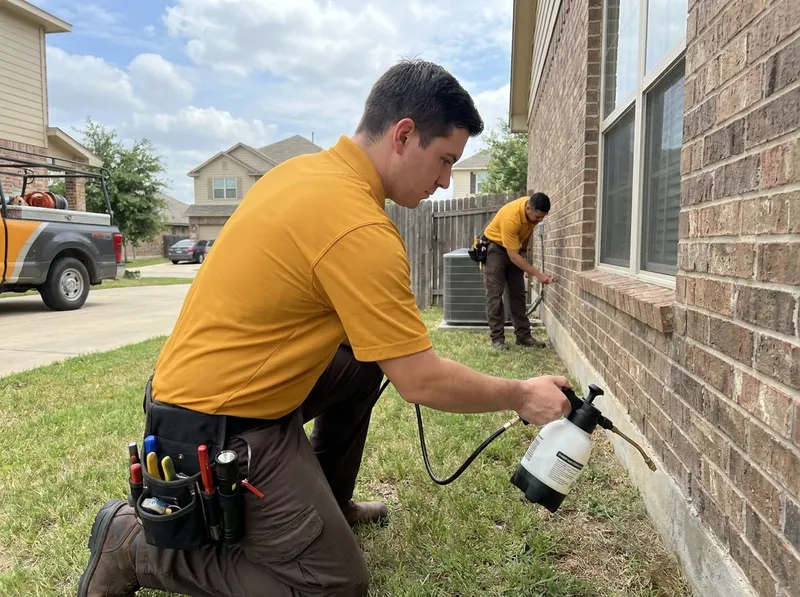
Quarterly fits homes where pest pressure is seasonal and repeating, not a one-time accident. That describes most of Pflugerville. Homes backing greenbelt and drainage easements in Falcon Pointe and Avalon get steady traffic off the open ground; lots near the Lake Pflugerville Trail and the fields past Commons at Rowe Lane sit close to the habitat scorpions and field mice use. Blackland Prairie clay shrinks in August and swells after a wet spring, and those seasonal cracks along a slab edge are a standing invitation — which is why a home in Windermere or Springbrook can be quiet in February and overrun by May. Quarterly is also the practical choice for landlords holding a few doors in Highland Park or Park Place, because a scheduled visit gives you a maintenance record instead of an emergency call from a tenant.
A one-time treatment is the better buy for a single, contained event: one scorpion on the bathroom tile after a plumbing repair, a wasp nest over a Cambridge Estates porch, ants that showed up once after a storm and never came back. If you're seeing the same pest in the same room every few weeks, that pattern says colony, not visitor, and single visits become the more expensive option — you pay the minimum again each time the season turns. The honest trade-off runs the other way too: quarterly is a recurring cost, and it is not a repair. Treatment holds a barrier; it does not close a gap under a garage door or a torn attic screen. When we find an entry point on a quarterly visit, we write it down and quote the exclusion work separately, so you can decide — that's the whole promise: find the entry point, seal it.
The schedule is built around local timing, not a national calendar. Spring visits weight fire ants and the ant surges that follow heavy rain in Pflugerville. Summer visits weight scorpions and the harborage along rock borders, AC pads and stacked pavers — the same May-through-September window when Typhoon Texas and Pfluger Park are busy and back doors stay open. Fall shifts to rodent and spider inspection around soffits and dryer vents. Winter is the quiet quarter and the best one for close slab and garage inspection, since activity is low and evidence is easier to read. Newer builds off Kelly Lane and older Travis County additions get different attention on the same visit; a 1990s home with an aging weep screed is a different inspection than a five-year-old slab.
On products and people: we tell you what's being applied, where, and how long to keep kids and dogs off treated exterior surfaces — usually until dry. We work around vegetable beds, pollinator plantings and pet bowls rather than blanket-spraying a yard, and we'll skip an area on request. Same technician handling your address where scheduling allows, so quarter-to-quarter comparisons actually mean something. No cartoon mascot, no fake badges, no address farmed out to whoever answers a call center — you get a scope, a price, and a date.
Every job gets a firm, written price after a free on-site visit.
Tell us about your recurring quarterly pest control job in Pflugerville and we'll send a clear, written quote — usually the same day.
 NexaPath Pest Control Service