Pflugerville's mosquito pressure is a water map, not a mystery. The blackland clay under most of this town drains slowly, so a low spot in a Falcon Pointe or Avalon backyard can hold rainwater for days after a storm —…
Pflugerville's mosquito pressure is a water map, not a mystery. The blackland clay under most of this town drains slowly, so a low spot in a Falcon Pointe or Avalon backyard can hold rainwater for days after a storm — long enough for a generation of Culex to finish out. Add the neighborhood retention ponds, the drainage swales between lots, and the creek corridors feeding Gilleland Creek near Pfluger Park, and there is standing water within flight range of most yards in Travis County. That is why we start with the water, not the sprayer. Corrugated drain extensions, French drain outlets, plant saucers, wheelbarrows, boat and trailer tarps, kids' pools, bird baths, gutter debris and AC condensate puddles are the usual producers we find on a first walk.
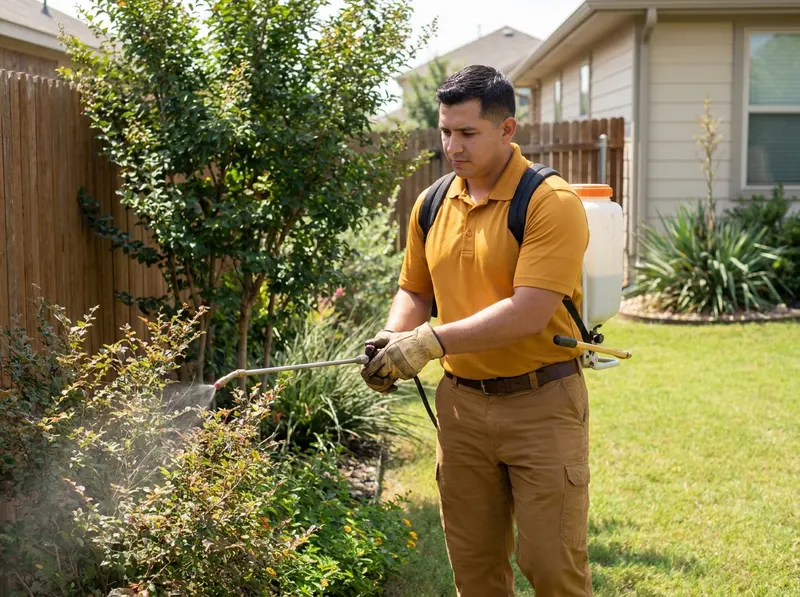
The second half is harborage. Mosquitoes don't fly all day — they sit in cool, humid shade and wait for evening. In the older, tree-heavy lots around Windermere and Highland Park, that shade is mature live oak canopy and thick foundation shrubs. In newer sections like Sorento, Springbrook and Commons at Rowe Lane, it's more often fence-line ivy, tall privacy hedges, deck skirting and the shady north side of the house. Treating those resting surfaces is what produces the drop you notice the same evening. Homes in Blackhawk, Park Place and Cambridge Estates that back onto greenbelt or field edges usually need the fence line treated more thoroughly than the interior of the yard, because that's the direction the pressure comes from.
One-time versus recurring is a genuine decision, and the honest answer depends on your calendar. A single treatment fits a fixed event — a graduation party, a backyard wedding, a weekend of visiting family — and is best applied within a few days of the date. Recurring visits fit the March-through-November stretch when Central Texas heat and rain keep cycling mosquitoes through. The trade-off to know up front: residual products break down. Sun, heavy irrigation and a hard Pflugerville thunderstorm all shorten how long a barrier holds, which is why a single spray in June rarely carries you to August. Anyone promising a permanent fix from one visit is selling something we won't.
One more limit stated plainly, because it matters if you live near water. Mosquito yard treatment reduces pressure inside your property line — it does not treat Lake Pflugerville, the Lake Pflugerville Trail edges, neighborhood ponds or the county's creek system. Homes a short walk from the lake can expect real improvement in the yard and still see mosquitoes on the trail. What we control is your lot: find the breeding water, treat the resting shade, and tell you which sources are yours to fix and which are the neighborhood's. If a sighting turns out to be something else entirely — scorpions on the patio, fire ant mounds after rain, ants tracking to a slab — we'll say so instead of selling you a mosquito plan. Find the entry point. Seal it.
Every job gets a firm, written price after a free on-site visit.
Tell us about your mosquito yard treatment job in Pflugerville and we'll send a clear, written quote — usually the same day.
 NexaPath Pest Control Service